The multi-enzymatic complex involved in the biological water-gas shift reaction
Currently, the industrial water-gas shift reaction (WGSR, CO + H2O-> CO2 + H2) is widely used for syngas upgrading. It is involved to modulate H2/CO ratios for the production of commodity products and liquid hydrocarbons. Hydrogenogenic carboxydotrophs are able to use CO as a sole energy source via the biological WGSR, which has the promise to become a green and cost-effective alternative to the industrial reaction. The biological WGSR is catalyzed by two enzymes, a monofunctional NiFe-carbon monoxide dehydrogenase (CODH) and a CO-induced energy-conserving NiFe-Hydrogenase (ECH). On a fundamental point of view, understanding the multi-enzymatic complexes involved in microbial CO metabolism is a challenge. Our model bacteria will be the mesophilic Rhodospirillum rubrum and the thermophilic Carboxydothermus hydrogenoformans.
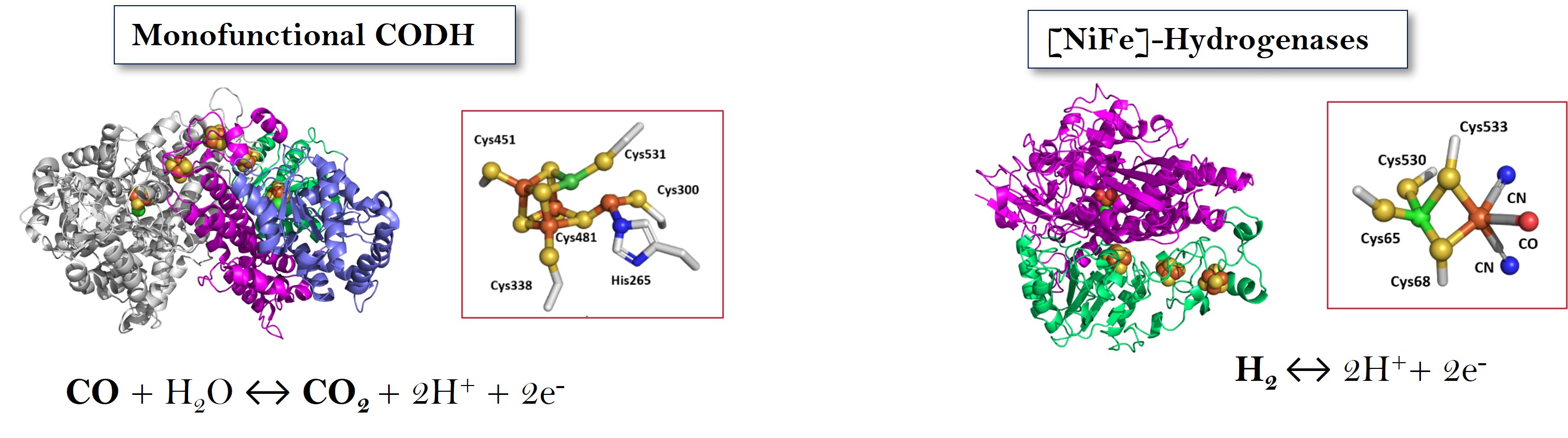
To this goal, our project is based on complementary approaches using advanced spectroscopy, biochemistry, advanced theoretical chemistry and structural methods to characterize CODH and ECH that is poorly described in the literature. We intend to better understand the reaction mechanism of CODH and ECH. In the latter case, the model enzyme will the one from the methanogenic archaea, Methanosarcina barkeri, the purification of which has already been described.