Olivier Hamelin
PFAS (per- and polyfluoroalkyl substances) are extremely stable chemical compounds due to their strong carbon-fluorine bond. This gives them interesting industrial properties but, on the other hand, makes them highly persistent in the environment, hence their classification as ‘forever chemicals’. They disperse easily in water, soil and air, and accumulate over time.
In ecosystems, PFAS are bioaccumulative and can disrupt the reproduction, development and immune systems of many species. In humans, chronic exposure is associated with toxic effects such as hormonal disorders, liver damage, decreased immune response and an increased risk of certain cancers.
Several degradation methods, such as pyrolysis, oxidation, reduction or (photo)catalytic processes, have been developed. However, these approaches have significant limitations: they are often energy-intensive, require harsh conditions, can cause catalyst passivation and lead to the formation of partially fluorinated by-products, which are sometimes as persistent and toxic as the initial PFAS.
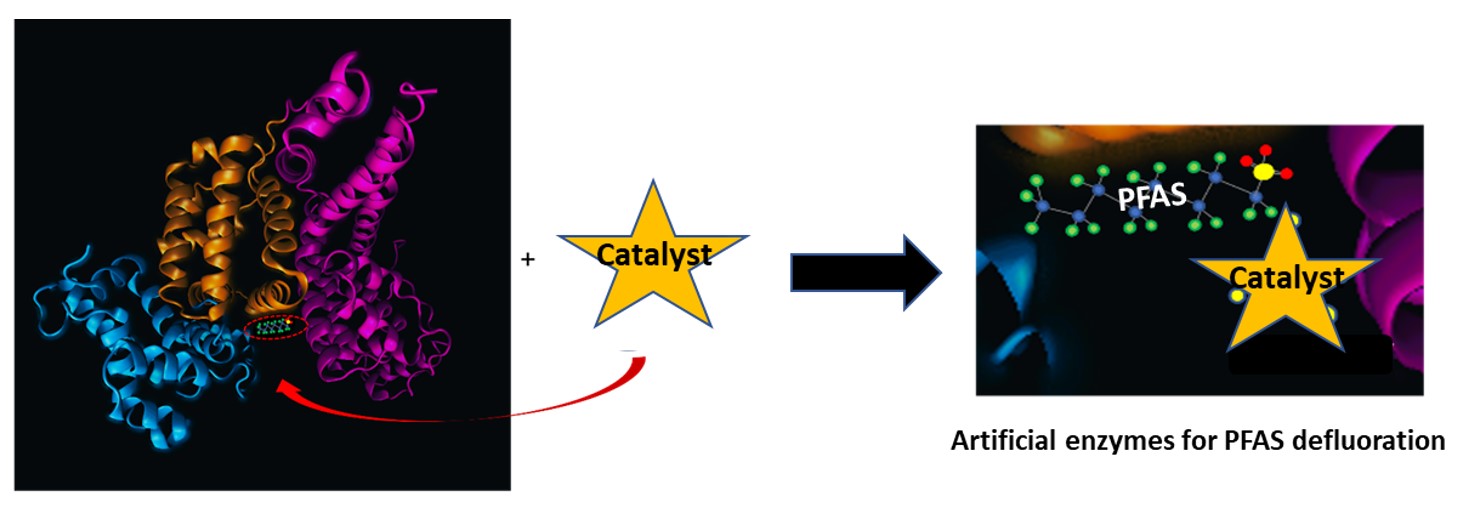
In this project in collaboration with Dr Nicolas Duraffourg (BioCE team, LCBM), we propose to develop biohybrid systems combining protein structures known to have a high affinity for PFAS with various inorganic or metallic catalysts to ensure their partial or even total defluorination. These artificial metalloenzymes would therefore enable work to be carried out under mild temperature and pressure conditions, selectivity for this type of fluorinated compound, and work in aqueous environments, thereby avoiding the use of polluting organic solvents.