L. Albertin, C. Marchi-Delapierre, S. Ménage Cyclic organic carbonates (COCs) are stable, generally non-toxic liquid compounds that enable long-term CO₂ sequestration. Given that their synthesis is widely used in industry, as they can serve as solvents and intermediates in the manufacture of basic chemicals, converting captured carbon dioxide into COCs would significantly improve the cost-effectiveness of carbon capture and utilisation (CCU) technologies. In particular, the direct synthesis of COC from alkenes and carbon dioxide (oxidative carboxylation) has the advantage of using starting compounds that are less toxic, more readily available and less expensive than the corresponding epoxides. (Scheme 1).
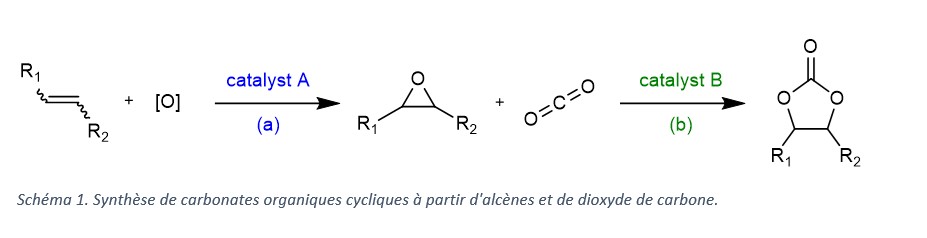 The project involves designing selective, reusable heterogeneous catalysts capable of concentrating CO₂ from a gas mixture and then incorporating it into cyclic carbonates through monotopic oxidative carboxylation of alkenes under mild conditions.
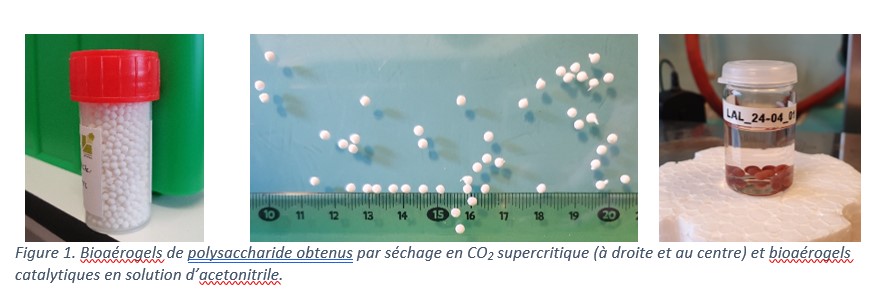
To achieve this, bioaerogels are prepared from bio-based polysaccharides that capture CO₂ through chemisorption. These bioaerogels are then functionalised with inorganic complexes capable of catalysing the oxidation of alkenes into epoxides or the insertion of CO₂ into the latter to produce COCs at room temperature and low gas pressure. Thanks to the use of green oxidants (O₂ or H₂O₂) and the reuse of the catalyst, COC production would be less costly and less impactful on the environment, while contributing to the economics of carbon dioxide capture and utilisation strategies.